Carbon Zinc Batteries and Alkaline Batteries are the two most common types of dry batteries in size AA and AAA, with significant differences in core performance, applicable scenarios, and cost.
Core material
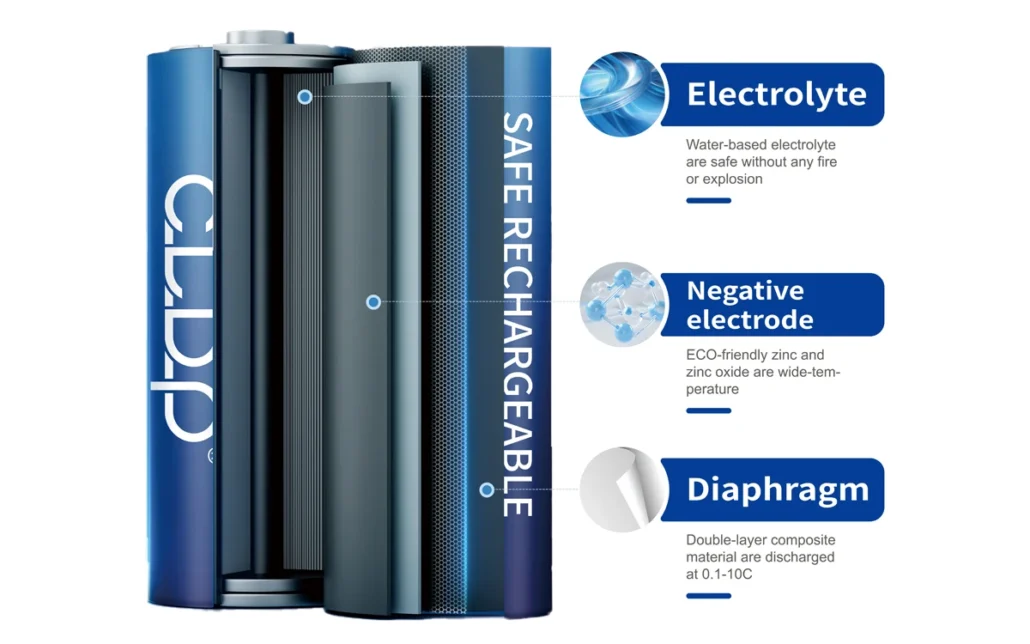
From the perspective of core materials, the positive electrode of carbon batteries is manganese dioxide, the negative electrode is a zinc cylinder, and the electrolyte used is ammonium chloride or zinc chloride aqueous solution; Alkaline batteries also use manganese dioxide as the positive electrode, zinc powder as the negative electrode, and potassium hydroxide alkaline solution as the electrolyte.
Battery capacity
In terms of battery capacity and discharge stability, carbon based batteries have a lower capacity, only 1/3-1/2 of alkaline batteries of the same specifications. Moreover, during discharge, the voltage drops rapidly with the consumption of electricity, making it easy to experience a “voltage dip”; Alkaline batteries have high capacity, strong continuous discharge ability, and small voltage fluctuations throughout the discharge process, which can make the equipment operate more stably.
Applicable devices
There is also a clear distinction in terms of applicable devices. Carbon based batteries are suitable for low-power, intermittent devices such as remote controls, clocks, radios, and simple structured toys; Alkaline batteries are more suitable for high power consuming devices that require continuous operation, such as digital cameras, electric toys, flashlights, wireless mice, and blood pressure monitors.
Shelf life
In terms of shelf life and leakage risk, carbon based batteries have a shorter shelf life, usually only 2-3 years, and are prone to leakage problems; Alkaline battery sealing technology is better, with a shelf life of up to 5-10 years and lower risk of leakage. You don’t have to worry about mileage loss when stocking up.
Cost
In terms of price and cost, the advantage of carbon based batteries is their affordability, high cost-effectiveness, and suitability for one-time bulk purchases; The price of alkaline batteries is relatively high, about 2-3 times that of carbon batteries, but due to their longer battery life, they are more cost-effective for long-term use.
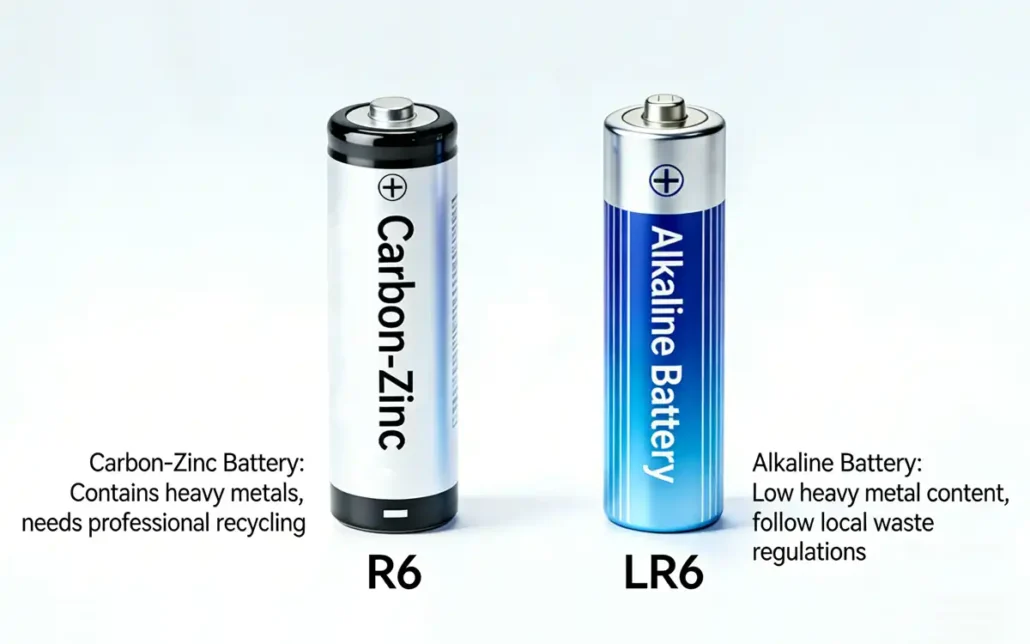
Comparison of Environmental Protection
From the perspective of environmental recycling, carbon batteries contain heavy metals and require professional channels for recycling. Discarding them indiscriminately can pollute the environment; Alkaline batteries have lower heavy metal content and can be directly disposed of with household waste in some areas, but specific environmental regulations must be followed.
Through comparison, we can find that compared to carbon batteries, alkaline batteries have better advantages in terms of capacity and environmental protection, which is also the reason why carbon batteries are gradually being phased out in the market.