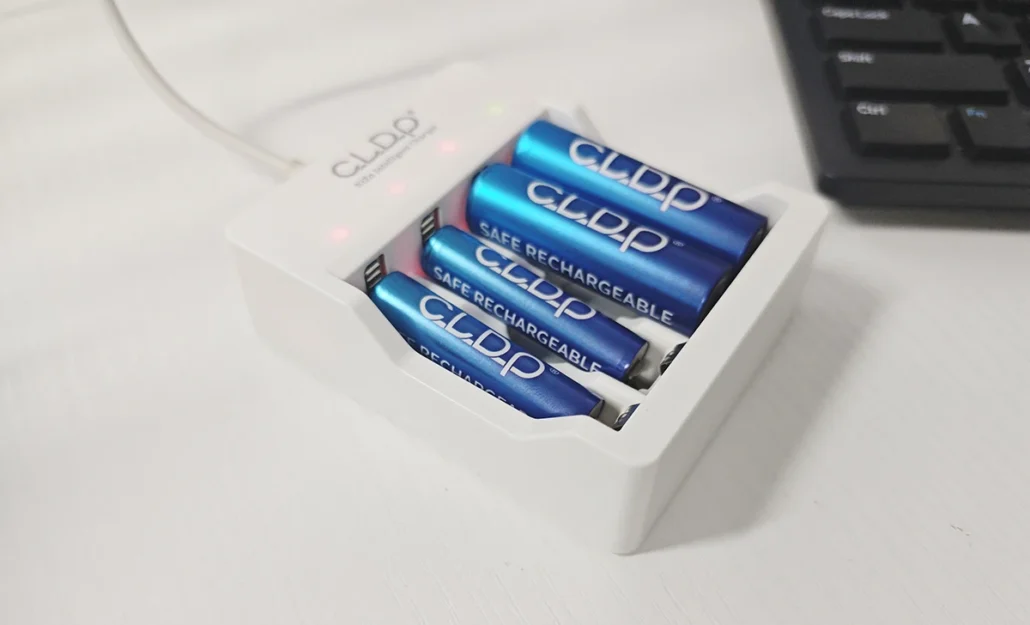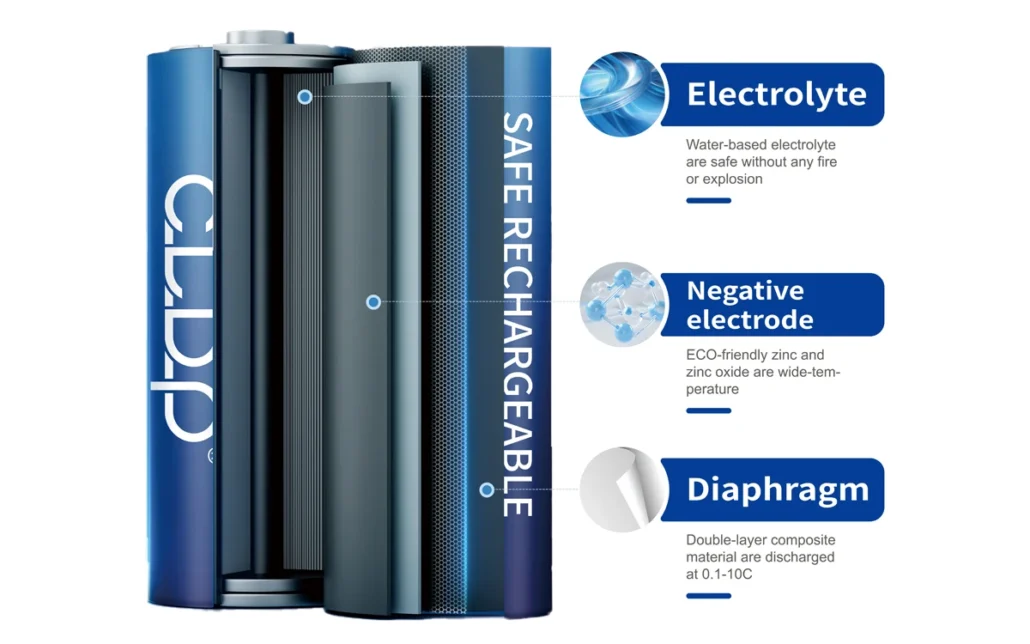
As an emerging rechargeable battery technology, zinc nickel batteries have their own advantages and disadvantages in terms of performance, environmental protection, and cost compared to traditional NiMH batteries, lithium batteries, and disposable alkaline batteries. The following article introduces the advantages and disadvantages of zinc nickel batteries compared to other batteries.
Advantages and disadvantages compared to NiMH batteries
Advantages:
Higher voltage: The nominal voltage of zinc nickel batteries is 1.6V, higher than the 1.2V of nickel metal hydrogen batteries. In voltage sensitive devices such as digital cameras and electric toys, it can provide power output closer to alkaline batteries, avoiding “undervoltage protection” caused by insufficient voltage.
Better low-temperature performance: In environments below 0 ℃, the discharge capacity retention rate of zinc nickel batteries is higher than that of nickel hydrogen batteries, making them more suitable for outdoor low-temperature scenarios such as skiing equipment and field recorders.
Lower self discharge rate: After being stored for 3 months, the remaining battery capacity of zinc nickel batteries is usually about 15% higher than that of nickel metal hydrogen batteries, and devices that are idle for a long time (such as emergency flashlights) are less likely to “lose power” when in use.
Disadvantages:
Slightly lower capacity: Under the same volume, the capacity of a No. 5 zinc nickel battery is about 500-1500mAh, while a high-quality NiMH battery can reach 2500mAh. When used in low current discharge devices, the battery life is short.

Advantages and disadvantages compared to lithium batteries
Advantages:
Higher safety: Zinc nickel batteries do not contain lithium elements, avoiding the risk of explosion that may occur during overcharging and puncture of lithium batteries. They are more suitable for scenarios with high safety requirements such as children’s toys and household medical equipment.
No need for special protection circuits: Lithium batteries require complex BMS protection boards to prevent overcharging and overdischarging, while zinc nickel batteries have more stable chemical properties and lower usage thresholds.
Lower cost: The raw materials (zinc, nickel) for zinc nickel batteries are priced lower than lithium. Under the same capacity, the unit price of zinc nickel batteries No. 5/7 is about 60% -70% of lithium batteries, with less initial investment.
Disadvantages:
Low energy density: Lithium batteries have a higher energy density than zinc nickel batteries, and in devices that are sensitive to volume and weight (such as drone remote controls and ultra-thin Bluetooth speakers), zinc nickel batteries have a significant disadvantage in terms of battery life.
Slow fast charging speed: Zinc nickel batteries usually take 4-6 hours to fully charge, while lithium batteries support fast charging technology, and some models can be fully charged in 1 hour, which is inconvenient in emergency situations.
Advantages and disadvantages compared to alkaline batteries
Advantages:
More economical: Alkaline batteries are disposable, while zinc nickel batteries can be recharged more than 500 times, and the total cost of use is much lower than alkaline batteries.
Better environmental friendliness: Some alkaline batteries may contain heavy metals, which can contaminate soil and water sources if discarded indiscriminately; Zinc nickel batteries are recyclable and emit minimal pollutants during the production process.
More stable performance: The voltage of alkaline batteries gradually decreases with the decrease of battery capacity (from 1.5V to 0.9V), and the voltage drop amplitude is large, which may lead to unstable equipment operation; The voltage platform of zinc nickel batteries is more stable (most of the time the voltage is stable at around 1.6V, and the cutoff voltage is reduced to 1.3V), especially suitable for precision electronic devices.
Disadvantages:
High initial investment: The initial cost of purchasing zinc nickel batteries and chargers is higher than buying alkaline batteries directly. For low-frequency devices (such as remote controls that replace batteries once a year), the short-term cost-effectiveness is not advantageous.
In summary, the core advantages of zinc nickel batteries lie in their safety, stability, circular economy, environmental friendliness, and durability, making them more suitable for high power consuming equipment, extreme environments, medium to high frequency use, and scenarios that are sensitive to safety and long-term costs. When making a selection, it is necessary to consider the equipment characteristics, frequency of use, and budget comprehensively.