In our daily lives, the AAA battery is the “energy source” for many small devices, such as TV remote controls, electronic thermometers, children’s toys, small calculators, etc. In the selection of battery AAA, NiMH batteries and alkaline batteries are the two most common types. Many people get caught up in a dilemma when choosing: should they choose the one with longer battery life or the one that is more cost-effective? In fact, as long as we understand the core differences between these two types of batteries in terms of endurance, usage cost, and applicable scenarios, we can make the optimal choice based on our own needs.
Comparison of Battery Life and Cost
To determine which type of battery is more suitable for oneself, the first step is to clarify the specific performance of the AAA NiMH battery and alkaline battery in the two key dimensions of range and cost, which are also the core differences between the two.
Battery Life: Which Makes a Device Last Longer?
The battery’s endurance directly determines how long the device can be used continuously, which mainly depends on the battery’s “capacity” (unit: milliampere hour, mAh) and “discharge stability”.
AAA NiMH battery: As a rechargeable battery, its capacity is generally higher, commonly ranging from 500mAh to 1000mAh. However, due to voltage defects, NiMH batteries cannot fully discharge their power, which may result in shorter discharge times.
AAA alkaline battery: It is a disposable battery with a capacity typically between 600mAh and 1000mAh. However, alkaline batteries have a higher voltage than NiMH batteries, so their power will be stronger and their discharge time will not be shorter than NiMH batteries.
Cost of use: short-term cost-effectiveness or long-term savings
Cost is an important consideration for many people when choosing batteries, and the cost difference between NiMH batteries and alkaline batteries is mainly reflected in the “single purchase cost” and “long-term usage cost”.
Single purchase cost: Alkaline batteries are cheaper. If it is only for short-term and small-scale use, the single cost of buying alkaline batteries is lower.
Long term usage cost: NiMH batteries are more cost-effective. The cycle life (number of charge and discharge cycles) of NiMH batteries is usually between 500-1000 times. Over the long term, the total cost of using NiMH batteries will be much lower than that of alkaline batteries.

Beyond battery life and cost, these differences are also crucial.
In addition to the core battery life and cost, the differences in charging characteristics, applicable equipment, and environmental friendliness between NiMH batteries and alkaline batteries will also affect our choice.
Charging characteristics: recyclable vs disposable
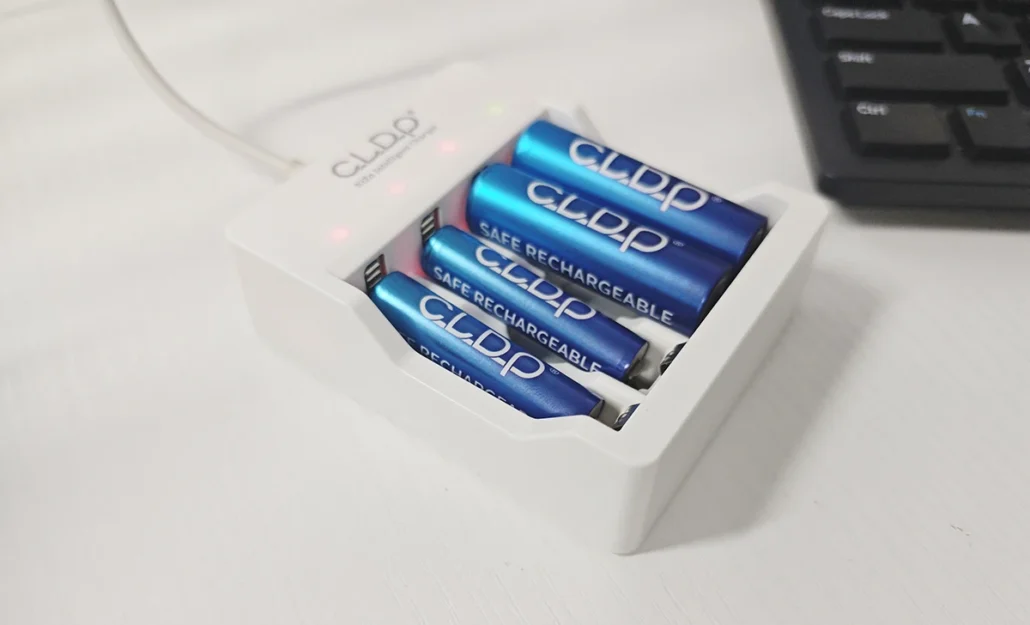
AAA NiMH battery: Can be recharged repeatedly and requires a dedicated charger (some chargers support fast charging and can be fully charged in 1-3 hours, while regular chargers require 6-8 hours). When charging, be careful not to overcharge (unplug it promptly after being fully charged), and do not leave it idle for a long time after fully discharging, otherwise it will affect the battery life.
AAA alkaline battery: absolutely cannot be charged! Alkaline batteries are disposable batteries and their internal structure does not support repeated charging. Forced charging may cause safety hazards such as battery leakage, bulging, and even fire, as well as damage to chargers and devices.
Applicable equipment: Match based on “usage frequency”
The usage frequency and power consumption of different devices vary, and the suitable batteries are also different:
Devices suitable for using AAA NiMH batteries: devices with high usage frequency and moderate power consumption, such as children’s electric toys (played every day), wireless mice (used for a few hours every day), and small handheld fans (frequently used in summer). This type of device has a high demand for battery life, and using NiMH batteries can reduce the trouble of frequent battery replacement and save money in the long run.
Devices suitable for using AAA alkaline batteries: devices with low usage frequency and minimal power consumption, such as TV remote control (pressed several times a day), electronic thermometer (only used when cold), smoke alarm (long-term standby, low power consumption). This type of device does not require high battery life, alkaline batteries have low single use costs, and there is no need to purchase additional chargers, making use more worry free.
Environmental friendliness: who is more ‘green’
From an environmental perspective, NiMH batteries have more advantages. NiMH batteries are reusable and can reduce the generation of waste batteries; Moreover, legitimate brand NiMH batteries do not contain harmful substances such as mercury and cadmium, and can be disposed of as “recyclable waste” after disposal. Although most alkaline batteries are now “mercury free alkaline batteries”, they are still considered disposable waste and will generate a lot of garbage after being used in large quantities, causing certain pressure on the environment.
Common Questions: Avoiding Mistakes in Selection and Use
Question 1: How to determine the voltage threshold of the device to avoid incomplete discharge of NiMH batteries?
Most equipment manuals will indicate the “working voltage range”. If it is marked as “1.0V-1.5V”, it means that the voltage threshold is low and suitable for NiMH batteries; If labeled as “1.2V-1.5V”, careful selection is necessary.
Question 2: Will NiMH batteries run out of battery after being stored for a long time? How to store it?
NiMH batteries have a slight “self discharge” phenomenon, with a monthly decrease in battery capacity of 5% -10%. When not in use for a long time, it is necessary to fully charge (maintain 50% -70% capacity) and store it in a cool and dry place (avoid direct sunlight, high temperature or humidity). Recharge the battery every 3-6 months to prevent damage caused by “power loss”.
Question 3: How long can alkaline batteries be stored if they are not used up?
Unopened alkaline batteries have a shelf life of 5-10 years, and it is recommended to use them up within 1 year after opening. When storing, keep away from metal objects and do not mix with other types of batteries to prevent leakage and corrosion.
Summary
The key to choosing between NiMH battery and alkaline battery is to balance the range and cost based on the frequency of device usage and long-term usage needs. As long as the voltage characteristics of the device are clearly defined and combined with usage requirements, a precise balance can be found between battery life and cost, and the most suitable AAA battery can be selected.