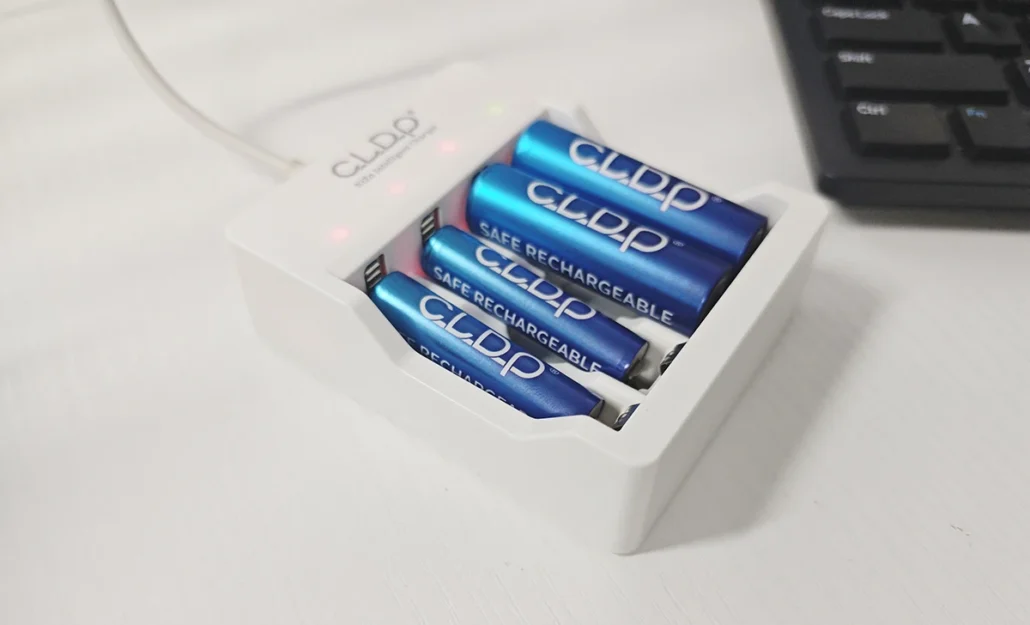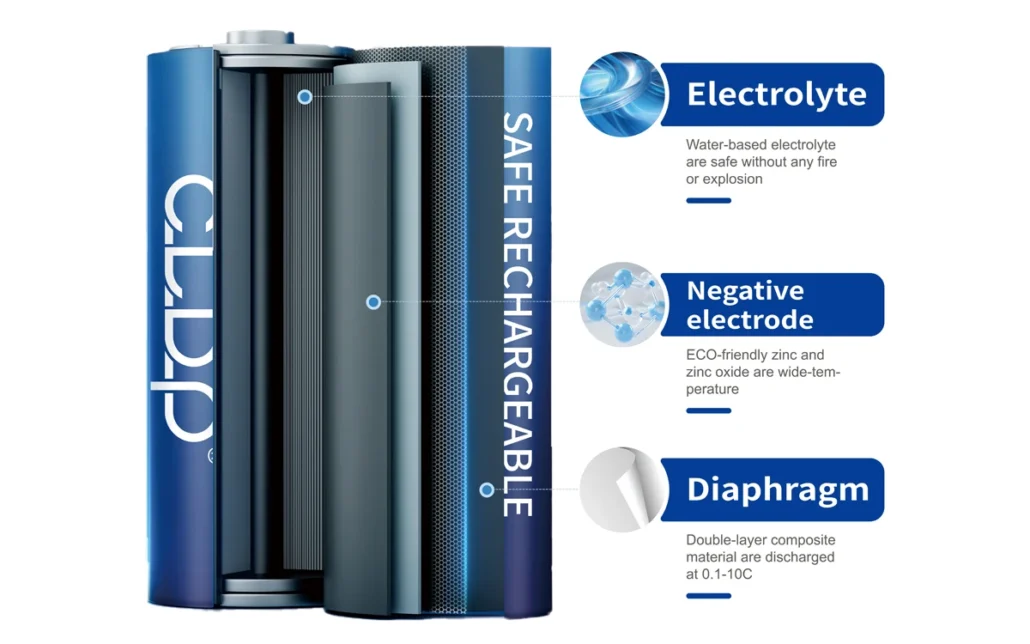
It is not recommended to mix AA and AAA rechargeable batteries from different brands, whether used in the same device or charged together in a charger. Mixing them may shorten battery life, affect device performance, and even pose safety hazards. This article will provide you with a detailed explanation of the reasons behind it.
Why is it not recommended to mix different brands of rechargeable batteries?
The core issue lies in the fact that different brands of rechargeable batteries, even if the models (AA/AAA) are the same, have significant differences in their core parameters and performance. If mixed, it will break the balance:
Inconsistent Capacity: Different brands of batteries may have different capacities (such as the common “2000mAh” and “2500mAh” for NiMH batteries), for example, A brand’s 2500mAh and B brand’s 2000mAh AA batteries may be mixed. When the device is discharged, the battery with a smaller capacity will first deplete its power, while the battery with a larger capacity will continue to “reverse charge” it, which may cause the small capacity battery to swell, leak or over discharge, and also result in the large capacity battery’s power being wasted, resulting in a shorter overall battery life compared to using the same capacity battery.
The voltage/discharge curves are different: even for NiMH batteries (nominal 1.2V) or Zn-Ni batteries (nominal 1.6V), the actual voltage output curves of different brands also vary – some brands have higher initial discharge voltage, while others are more stable in the later stage. When mixed, the device may experience frequent voltage fluctuations (such as toys suddenly freezing or remote control malfunctioning), but in reality, the battery still has remaining power but cannot be used. Long term unstable voltage may also damage the circuit of equipment (such as precision devices like wireless mice and flashlights).
The cycle life of charging and discharging varies: the durability of batteries from different brands varies greatly. For example, A brand can be charged 800 times, while B brand can only be charged 500 times. If cross brand batteries with different levels of old and new are mixed (such as A brand new batteries and B brand old batteries that have been used for half a year), the decay of the old batteries will drag down the new batteries, causing them to experience early battery decay, which is equivalent to wasting the life of the new batteries.
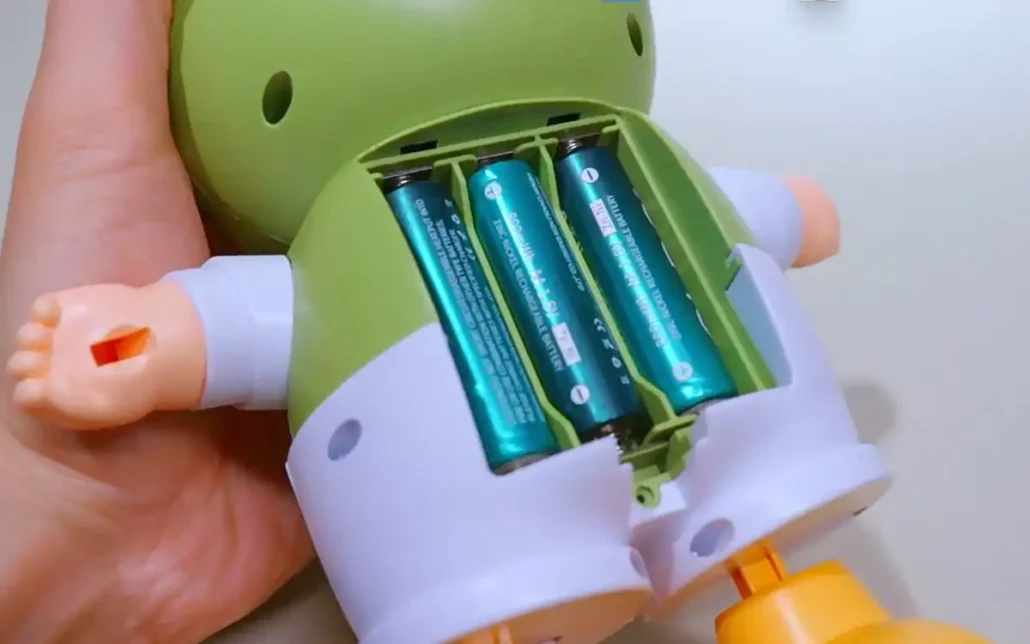
Overlapping safety risks: Different brands of batteries have different standards for leak prevention, high temperature resistance, and other safety designs. For example, some brands use thick steel shell anti bulging bags, while others have lightweight designs. When mixed, if one of the batteries leaks or short circuits due to mismatched parameters, it may trigger a chain reaction, causing other batteries to also heat up and be damaged, especially in high load devices such as electric toys and camera flashlights where the risk is higher.
What situations should be absolutely avoided
In addition to mixing batteries from different brands, these two implicit mixing methods should also be cautious as they carry higher risks.
Mixing different types of batteries: for example, mixing NiMH rechargeable batteries (1.2V) and zinc nickel rechargeable batteries (1.6V) together, or mixing them with disposable alkaline batteries (1.5V). Voltage differences can directly cause equipment to fail to start and even burn out circuits; When inserting the charger, it may also damage the battery (such as using a zinc nickel charger to charge NiMH batteries).
Mixing damaged or bulging batteries with good batteries: Even if they are of the same brand, as long as one battery has bulges, leaks, or a damaged shell, it must not be used with other batteries – leakage can corrode the equipment battery compartment, bulging batteries may explode during charging, and other normal batteries may also be affected.
If there are currently no batteries of the same brand, what should be noted for emergency use
If batteries of the same brand cannot be found temporarily, they must be mixed urgently (limited to short-term, low load devices such as remote controls and clocks), meeting three conditions and minimizing usage time:
The type and model must be completely consistent: they must all be of the same type (such as all NiMH or all zinc nickel) and model (all AA or all AAA), and cannot cross types or models.
Capacity and age similarity: Check the capacity label on the battery packaging or shell (such as “2000mAh”), and try to choose one with a capacity difference of less than 200mAh; And both should be “new batteries” (with a usage time of no more than 3 months) or “old batteries” (with similar cycle times) to avoid mixing old and new.
Only for low load devices: Do not use on devices that require high current discharge such as electric toys, cameras, flashlights, etc. Only for low-power devices such as remote controls, wireless mice, electronic clocks, etc., and replace with batteries of the same brand as soon as possible after emergency.
In short, the “adaptability” of rechargeable batteries is more important than brand. It is recommended to choose batteries of the same brand, model, capacity, and age for use, which can ensure battery life, reduce safety risks, and extend the lifespan of batteries and devices.